
Choose The Right Video Host for Your Online Course
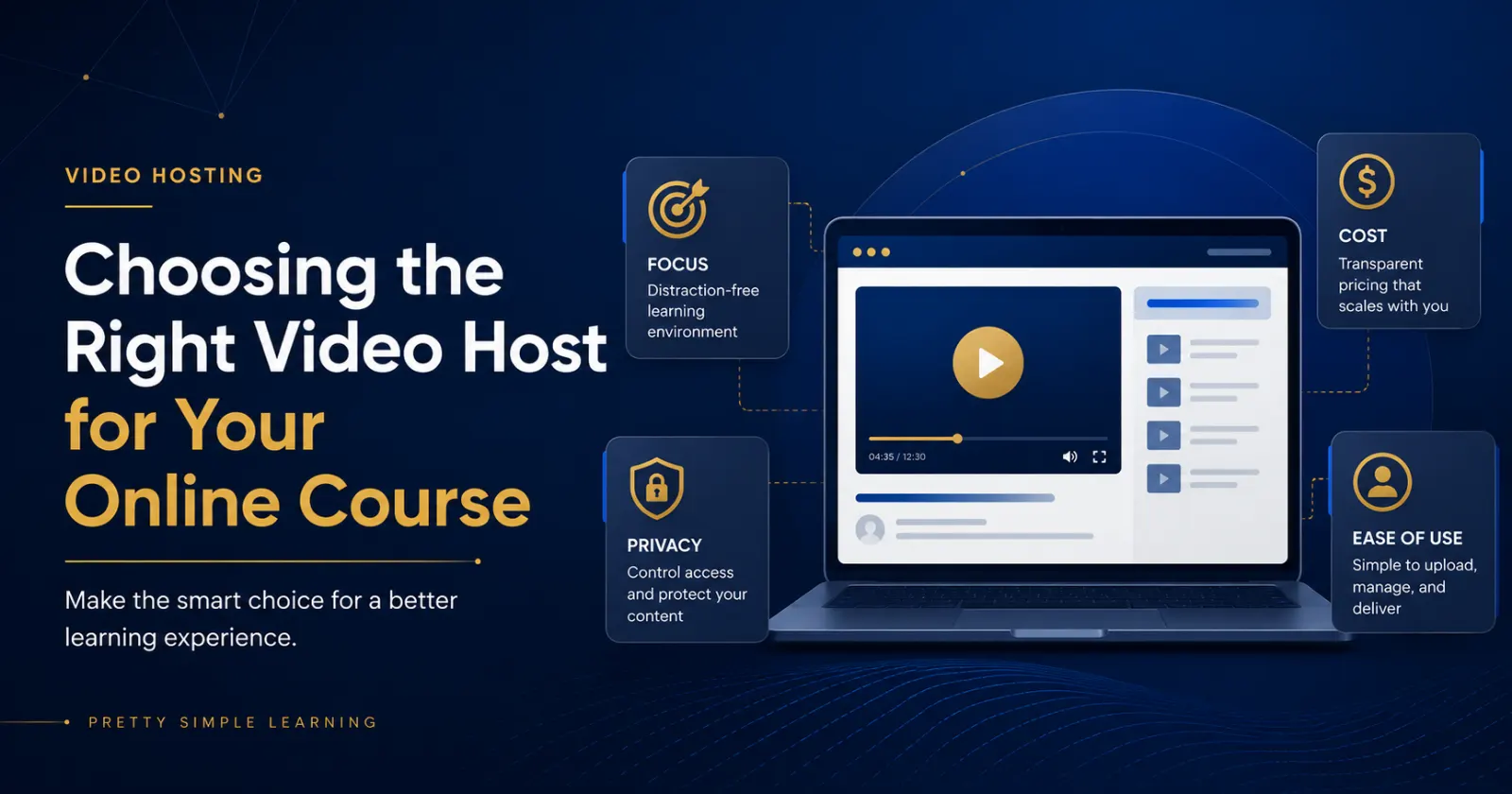
When you’re preparing to launch an online course, video hosting can feel like a technical decision. Which platform should you use? How much storage do you need? What does bandwidth mean? Should you use YouTube, Vimeo, or something else?
Those questions matter, but they should not be the starting point.
The better starting point is this: what kind of learning experience are you trying to create?
For course creators, video is not just a file to upload. It is part of the student experience. A good video host should support the course, not distract from it.
The problem with “free”
YouTube is familiar and free, which makes it tempting. For public marketing videos, previews, announcements, and discovery content, it can be a great option.
But inside a paid or professional course, YouTube can create problems. The player may include branding, suggested videos, ads, comments, external links, and other distractions. Even when the content itself is excellent, the environment around it can pull students away from the lesson.
In a course, the goal is not discovery. The goal is focus.
What matters most in course video hosting
Before comparing providers, consider the practical factors that shape the student experience.
Clean playback matters because students should be focused on the lesson, not the video platform.
Reliable delivery matters because buffering, playback errors, and confusing access issues can make the course feel less professional.
Ease of embedding matters because your videos should fit naturally into your course pages, lessons, and learning flow.
Privacy and access control matter because paid course content should not feel like it is floating around publicly.
Cost matters because many courses launch before revenue is proven. It rarely makes sense to overbuy video infrastructure before the course has traction.
Ease of management matters because someone has to upload, organize, replace, and maintain those videos over time.
Match the host to the stage of the course
A brand-new course does not always need the most powerful video platform. It needs the right platform for the current stage.
If you are testing a course idea, you may need a simple, affordable option.
If you are launching a paid course, you may need a clean embedded player and basic privacy.
If your course is growing, you may need stronger analytics, better organization, or more predictable costs.
If video becomes central to your product, you may eventually need deeper platform integration or native hosting.
The key is to avoid solving tomorrow’s problem with today’s budget.
Why flexibility matters
This is one reason Pretty Simple Learning is designed around flexible video choices. Course creators should not be forced into a single video hosting model. Some may already have Vimeo. Some may want a lower-cost option. Some may prefer a business-friendly dashboard. Others may eventually want native video hosting directly inside the learning platform.
The right answer depends on the course, the audience, the budget, and the launch stage.
For many creators, the best path is to start simple: choose a clean, affordable host that supports the course experience, then upgrade only when the course revenue, audience size, or feature requirements justify it.
A simple decision rule
When choosing video hosting, ask:
Will this option help students stay focused, help me manage the course efficiently, and fit the budget I have right now?
If the answer is yes, it is probably a good starting point.
The best video host is not always the biggest, most expensive, or most feature-rich. For an online course, the best video host is the one that supports learning without adding friction.
In our next post, we'll review some options that are a good fit with Pretty Simple Learning. If you have questions, just send us a message.